

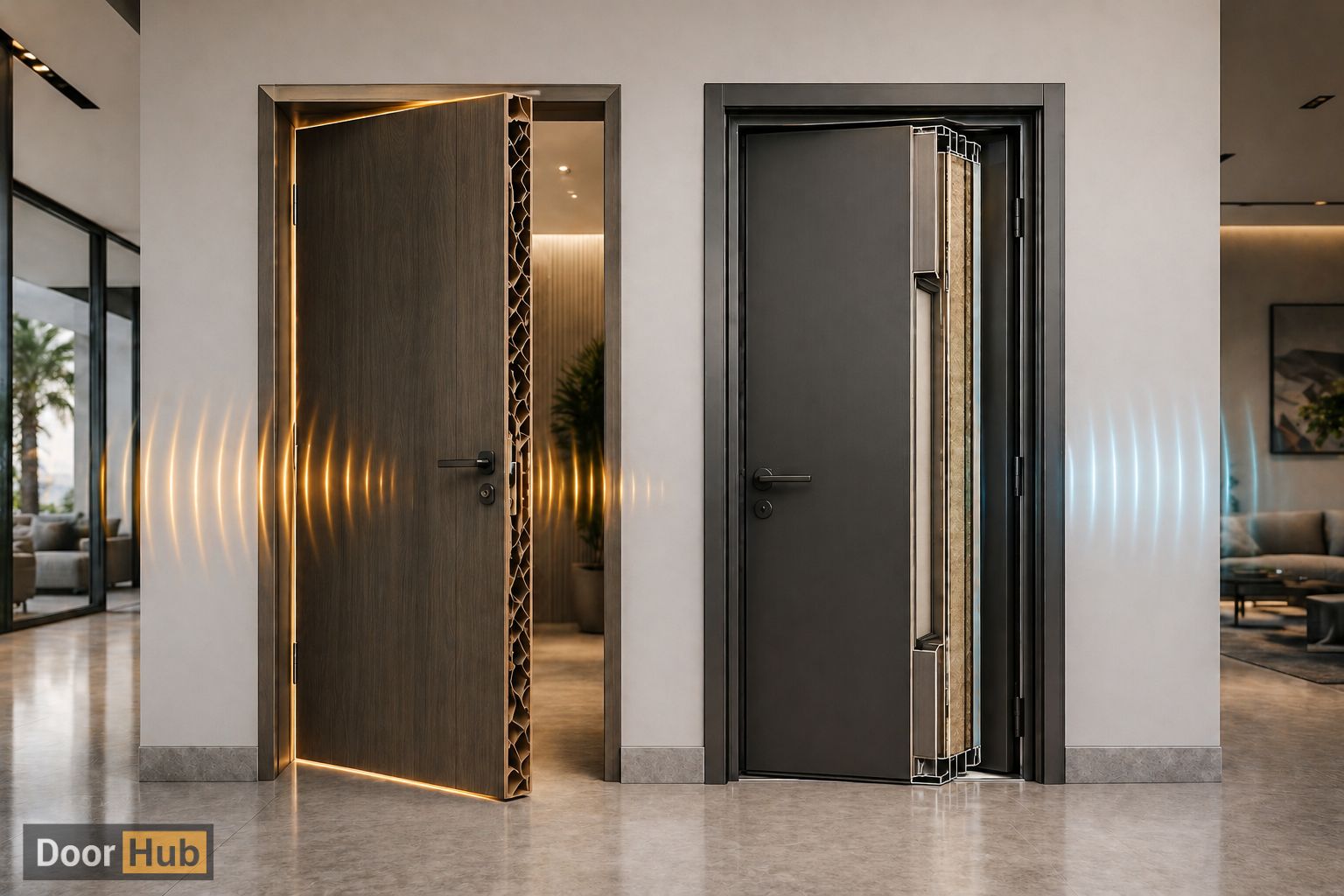
سُمك الباب مقابل الأداء الكلي للباب: ما يهم حقًا في مشاريع الإمارات العربية المتحدة
في العديد من مشاريع التشطيبات والإنشاءات في الإمارات العربية المتحدة، غالبًا ما يُختزل اختيار الأبواب إلى معيار بسيط:
"ما سُمك الباب؟"
يبدو الأمر منطقيًا - فالأبواب السميكة تبدو أقوى وأكثر فخامة. لكن في الواقع، لا يُخبرك السُمك وحده إلا القليل عن أداء الباب في الموقع.
بالنسبة للمطورين والمقاولين، غالبًا ما يؤدي هذا الفهم الخاطئ إلى مشاكل في العزل الصوتي، ومشاكل في المحاذاة، ومشاكل في الصيانة، وحتى مخاطر تتعلق بالامتثال للمعايير.
إذن، السؤال الحقيقي هو:
ما الذي يُحدد فعليًا نظام الأبواب عالي الأداء؟
يُوضح هذا الدليل الأمر بوضوح، استنادًا إلى تجارب مشاريع واقعية في الإمارات العربية المتحدة.
هل يُعد سُمك الباب مؤشرًا موثوقًا للأداء؟
سؤال: هل يُمكن الحكم على جودة الباب بناءً على سُمكه فقط؟
إجابة مباشرة:
لا - سُمك الباب هو مجرد مواصفة سطحية ولا يعكس الأداء العام.
شرح مفصل
على الرغم من أن السُمك يُسهم في الصلابة، إلا أنه لا يكشف عن:
جودة البناء الداخلي
كثافة المواد
فعالية منع التسرب
أداء الملحقات
قد يتصرف بابان بنفس السُمك بشكل مختلف تمامًا في ظروف الاستخدام الواقعية.
ما الذي يُحدد نظام الباب عالي الأداء؟
سؤال: ما الذي يجب على المقاولين تقييمه بدلًا من السُمك؟
إجابة مباشرة:
يعتمد أداء الباب على النظام بأكمله - الضلفة، واللب، والإطار، ومانعات التسرب، والملحقات، والتركيب.
شرح مفصل
يتضمن نظام الباب الكامل ما يلي:
ضلفة الباب: السطح الخارجي واللب الداخلي
الإطار: الدعم الهيكلي والمحاذاة
مانعات التسرب: تمنع تسرب الهواء والصوت والضوء
الملحقات: المفصلات والأقفال وأجهزة الإغلاق
التركيب: التنفيذ النهائي في الموقع
إذا تعطل أحد المكونات، فإن أداء النظام بأكمله سيتأثر سلبًا.
لماذا يُعد بناء اللب الداخلي أكثر أهمية؟
سؤال: ما الذي يحدث داخل الباب ويؤثر على أدائه؟
إجابة مباشرة:
يُحدد اللب الداخلي قوة الباب، وعزله الصوتي، ومتانته على المدى الطويل.
شرح مفصل
تُنتج أنواع اللب المختلفة نتائج مختلفة:
لب مجوف ← خفيف الوزن، أداء محدود
لب مصمت ← أقوى، متانة أفضل
لب متعدد الطبقات مُصمم هندسيًا ← مُحسّن للأداء الصوتي والإنشائي
في مشاريع الإمارات العربية المتحدة، تُؤثر جودة اللب بشكل أكبر من سُمكه وحده.
كيف يؤثر الإحكام على الأداء الفعلي؟
سؤال: هل يُمكن أن تُؤثر الفجوات الصغيرة على أداء الباب؟
إجابة مباشرة:
نعم، حتى الفجوات الصغيرة جدًا يُمكن أن تُقلل بشكل كبير من الأداء الصوتي والبيئي.
شرح مفصل
مناطق التسريب الشائعة:
حول محيط الإطار
أسفل ضلفة الباب
عند وصلات الباب
بدون إحكام مناسب:
يتسرب الصوت بسهولة
يزداد تسرب الهواء
يدخل الغبار والملوثات
غالبًا ما يكون أداء الباب المُحكم جيدًا أفضل من الباب السميك ولكنه غير مُحكم الإغلاق.
دور الإطارات في أداء الأبواب
سؤال: لماذا يُعدّ إطار الباب بالغ الأهمية؟
إجابة مباشرة:
يضمن الإطار استقامة الباب وثباته وإحكام إغلاقه، وبدونه ينخفض الأداء.
شرح مفصل
الإطار عالي الجودة:
يحافظ على استقامة الباب مع مرور الوقت
يدعم إحكام الإغلاق
يمنع التواء الباب أو حركته
يؤدي سوء تصميم الإطار إلى:
فجوات غير متساوية
ترهل الباب
قصر عمره الافتراضي
في العديد من مشاريع الإمارات العربية المتحدة، تنشأ مشاكل الأداء من جودة الإطار، وليس من الباب نفسه.
الملحقات: عامل الأداء الخفي
سؤال: هل تُحدث المفصلات والأقفال فرقًا حقيقيًا؟
إجابة مباشرة:
نعم، تؤثر الملحقات بشكل مباشر على كفاءة عمل الباب وإحكام إغلاقه.
شرح مفصل
المكونات الرئيسية تشمل:
المفصلات ← تحمل الوزن وتحافظ على المحاذاة
الأقفال ← تضمن إغلاقًا محكمًا
أجهزة الإغلاق ← تحافظ على ضغط ثابت على موانع التسرب
قد تؤدي الأجهزة ذات الجودة المنخفضة إلى:
عدم المحاذاة مع مرور الوقت
ضعف منع التسرب
الحاجة إلى صيانة متكررة
غالبًا ما يتم إهمال الأجهزة، لكنها بالغة الأهمية للأداء طويل الأمد.
الأداء الصوتي: أكثر من مجرد السماكة
سؤال: هل يضمن الباب السميك عزلًا صوتيًا أفضل؟
إجابة مباشرة:
لا، يعتمد الأداء الصوتي على الكثافة، والتصميم، ومنع التسرب.
شرح مفصل
يتطلب العزل الصوتي الفعال ما يلي:
مواد داخلية كثيفة
تصميم متعدد الطبقات
منع تسرب الهواء
الباب السميك الذي يحتوي على فجوات سيتسرب منه الصوت، بينما سيمنعه النظام المصمم هندسيًا بشكل صحيح بفعالية.
يُعدّ هذا الأمر بالغ الأهمية في:
المكاتب
الفنادق
المجمعات السكنية
السلامة من الحرائق: لماذا لا يكفي سُمك الباب؟
سؤال: هل يُمكن تحديد تصنيف مقاومة الحريق بناءً على سُمك الباب؟
إجابة مباشرة:
لا، يعتمد أداء مقاومة الحريق على الأنظمة المعتمدة، وليس على الأبعاد المادية فقط.
شرح مُفصّل
تُختبر الأبواب المقاومة للحريق كوحدات متكاملة:
ضلفة الباب
الإطار
الأختام
الملحقات
لا يُشير السُمك وحده إلى المطابقة، بل الاعتماد هو الدليل.
مشاكل شائعة في مواقع المشاريع في الإمارات العربية المتحدة
سؤال: ماذا يحدث عندما يكون السُمك هو المعيار الوحيد؟
إجابة مباشرة:
غالبًا ما تواجه المشاريع إخفاقات في الأداء وتكاليف إصلاح باهظة.
شرح مُفصّل
تشمل المشاكل الشائعة ما يلي:
عدم إغلاق الأبواب بشكل صحيح
تسرب الصوت رغم سُمك الأبواب
فجوات ظاهرة وتشطيب رديء
الصيانة والتعديلات المتكررة
عادةً ما تكون هذه المشاكل ناتجة عن تقييم غير مكتمل للنظام.
أخطاء يجب تجنبها أثناء تحديد المواصفات
سؤال: ما الذي يجب على المقاولين الانتباه إليه؟
إجابة مباشرة:
تجنب الاعتماد على السماكة فقط وتجاهل عوامل الأداء على مستوى النظام.
شرح مفصل
أخطاء شائعة:
اختيار الأبواب بناءً على السماكة فقط
تجاهل تفاصيل البناء الداخلية
إهمال أنظمة العزل
استخدام تجهيزات رديئة الجودة
ضعف التنسيق أثناء التركيب
غالبًا ما تؤدي هذه الأخطاء إلى ارتفاع التكاليف على المدى الطويل.
قائمة مرجعية عملية لاختيار الأبواب
سؤال: كيف يمكنك ضمان تحديد الباب المناسب؟
إجابة مباشرة: قيّم النظام بأكمله، وليس المواصفات الفردية فقط.
شرح مفصل
نهج عملي:
تحديد متطلبات الأداء
العزل الصوتي، مقاومة الحريق، المتانة
تقييم البنية الداخلية
نوع المادة الأساسية وجودتها
فحص أنظمة الإحكام
أختام المحيط والأسفل
تقييم الإطار والملحقات
المكونات الهيكلية والوظيفية
ضمان التركيب الصحيح
تنفيذ احترافي في الموقع
يضمن هذا النهج أداءً ثابتًا وموثوقًا.
لماذا تُعدّ حلول الأبواب النظامية أفضل؟
سؤال: ما هي ميزة النهج النظامي؟
إجابة مباشرة:
يضمن تصميم جميع المكونات للعمل معًا لتحقيق الأداء الأمثل.
شرح مفصل
توفر الأبواب النظامية:
محاذاة وإحكام أفضل
متانة أعلى
سهولة التركيب
جودة ثابتة
يقلل هذا من الأخطاء ويحسن نتائج المشاريع في الإمارات العربية المتحدة.
الخلاصة
سُمك الباب ليس سوى أحد المعايير، فهو لا يحدد الأداء.
الأداء الحقيقي ينبع من النظام المتكامل.
لكل مكون دوره.
جودة التركيب تحدد النتائج النهائية.
بالنسبة للمطورين والمقاولين في الإمارات العربية المتحدة، يتمثل النهج الأمثل فيما يلي:
التركيز على أداء النظام، وليس فقط أبعاده.
تقييم المواد، وأنظمة منع التسرب، والتجهيزات معًا.
إعطاء الأولوية للوظائف طويلة الأمد على الافتراضات قصيرة الأجل.
عندما تتجاوز مسألة السماكة وتحدد النظام المتكامل بدقة، فإنك تقدم أبوابًا ذات أداء موثوق، تلبي التوقعات، وتقلل من المشاكل المستقبلية.
 الاستشارة
 أخذ القياسات
 تشكيل
تشكيل العقد
العقد الإنتاج