

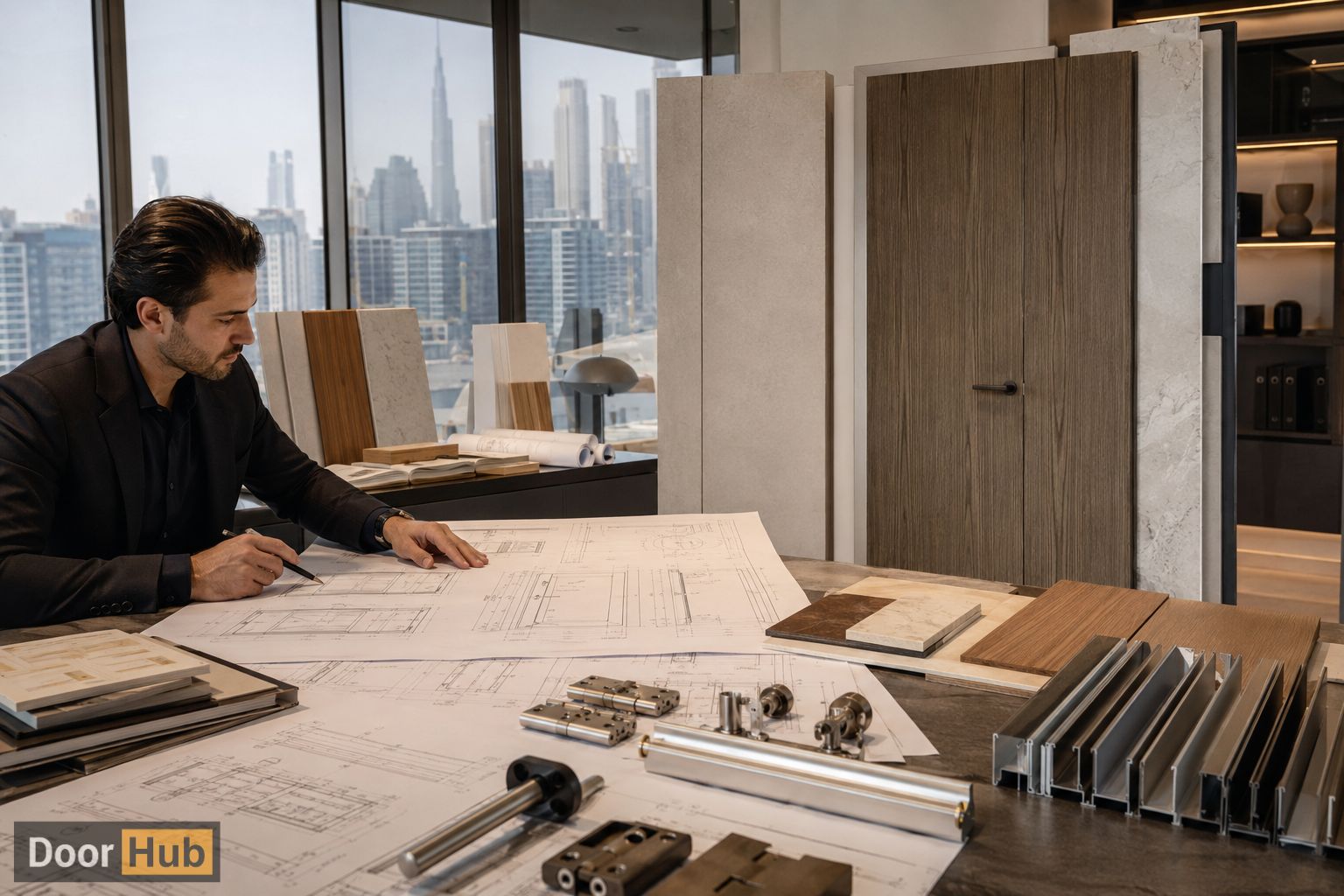
كيف نُعدّ ملفات التقديم التي تُعتمد من المحاولة الأولى
نادرًا ما تنجم تأخيرات تقديم المستندات عن عدم مطابقة الباب للمواصفات، بل عن نقص في الوثائق التي تُزوّد المهندس المعماري بكافة المعلومات اللازمة للموافقة عليها بثقة من المراجعة الأولى.
لذا، نُصمّم عملية إعداد الوثائق لدينا لتقليل هذا الخطر قبل وصول أي طلب إلى المُراجع.
لماذا نُعدّ وثائق التقديم قبل أن يطلبها المشروع؟
الإجابة المباشرة: نُعدّ وثائق خاصة بالمشروع كجزء من عملية تحديد المواصفات نفسها، بدلًا من تجميع أوراق التقديم بشكل تفاعلي بعد طلب المقاول لها، لأنّ إعداد الوثائق بشكل تفاعلي هو عادةً ما يُسبّب الثغرات والتأخيرات.
عندما تُعامل الوثائق كخطوة أخيرة، تُضاف بعد اتخاذ قرارات التصنيع، فمن السهل أن ينتهي الأمر بشهادة لا تُطابق التجميع تمامًا، أو برسم تنفيذي يعكس نسخة سابقة من المواصفات.
إنّ إعداد سلسلة الوثائق بالتزامن مع المواصفات نفسها يعني وجود كل ما يحتاجه التقديم مُسبقًا، ومُطابقًا تمامًا للتكوين المُقترح، عند استعداد المقاول للتقديم.
ما الذي تتضمنه حزمة تقديم Doorhub افتراضيًا؟
إجابة مباشرة: تتضمن كل حزمة تقديم نُعدّها شهادات اختبار مطابقة للمواصفات، ورسومات تنفيذية خاصة بالمشروع، وجدولًا للأجهزة مُقارنًا بجدول الأبواب، وعينات تشطيب مرتبطة بلوحة المواد المعتمدة.
لماذا لا نُرسل كتيبات منتجات عامة؟
يصف كتالوج الشركة المصنّعة القياسي خط إنتاج، وليس تركيبة الباب والإطار والأجهزة الخاصة بمشروع مُحدد. هذا التمييز مهم للمهندسين المعماريين الذين يُراجعون مدى المطابقة لمواصفات مُحددة، وليس لمجموعة منتجات عامة.
تُبنى حزم التقديم الخاصة بنا حول التجميع الفعلي المُقترح للمشروع، مما يُتيح للمهندس المعماري التحقق من المطابقة دون الحاجة إلى طلب وثائق إضافية بشكل منفصل.
رسومات تنفيذية مُصممة بناءً على الطلب الفعلي
تعكس الرسومات التنفيذية المُضمنة في حزمنا الأبعاد الدقيقة للإطار، وتُظهر التفاصيل، ومواقع الأجهزة للوحدات التي يتم تصنيعها فعليًا، وليست رسومات نموذجية عامة مُعدّلة لاحقًا.
كيف نُدير مطابقة الشهادات الخاصة بالحماية من الحريق والعزل الصوتي؟
إجابة مباشرة: نُطابق وثائق الاعتماد مع تكوين التجميع المُقدّم بدقة - اللب، والإطار، وأي زجاج - بدلاً من تقديم شهادة عامة لخط الإنتاج قد لا تُراعي التعديلات الخاصة بالمشروع.
كيف يمنع هذا الرفض الشائع؟
لا ينتقل تصنيف مقاومة الحريق أو العزل الصوتي، الذي تم اختباره على تكوين معين، تلقائيًا إلى نسخة مُعدّلة من المنتج نفسه. إذا كان باب المشروع يتضمن زجاجًا أو إطارًا مختلفًا عما تم اختباره في الأصل، فإن هذا التكوين يحتاج إلى وثائق داعمة خاصة به.
تتوافق الشهادة المُرفقة مع الطلب دائمًا مع ما يتم تصنيعه وتركيبه فعليًا، وليس مع نسخة مُجاورة منه، لأننا نُتابع التكوينات المُعتمدة المُخصصة لكل نوع من أنواع الأبواب.
كيف ندعم المقاولين عند الحاجة إلى استبدال في منتصف المشروع؟
إجابة مباشرة: عند الحاجة إلى استبدال، سواءً لأسباب تتعلق بالتكلفة، أو التوافر، أو تغييرات التصميم، نُقدّم وثيقة مُقارنة مباشرة مع المواصفات الأصلية، تُحدد بدقة التغييرات وتؤكد ما إذا كان الاعتماد لا يزال ساريًا.
لماذا يتم تجاهل هذه الخطوة في أماكن أخرى؟
تُعدّ عمليات الاستبدال التي تُجرى بشكل غير رسمي، دون مقارنة واضحة بين الوضع قبل وبعد التعديل، من أكثر الأسباب شيوعًا لتعليق الطلبات أثناء المراجعة. يحتاج المهندسون المعماريون إلى رؤية التغييرات بوضوح، وتوضيح سبب استيفائها للمتطلبات.
عادةً ما يُسهم تقديم هذه المقارنة بشكل استباقي، بدلًا من انتظار طلبها، في استمرار عملية مراجعة الاستبدال بسلاسة دون الحاجة إلى إعادة تقديم الطلب بالكامل.
كيف نحافظ على محاذاة جداول الأجهزة والأبواب؟
الإجابة المباشرة: يتم إنشاء جداول الأجهزة والأبواب من نفس بيانات المواصفات، بدلاً من تجميعها بشكل منفصل، مما يزيل عدم التطابق في الكميات أو التشطيبات أو الأنواع التي تؤدي عادةً إلى استعلام إرسال.
عندما يتم إنشاء هاتين الوثيقتين بشكل مستقل، تتسلل التناقضات الصغيرة بسهولة، ويتم ملاحظة تشطيب الأجهزة بشكل مختلف عبر الجدولين، أو تتم الإشارة إلى نوع الباب بكمية مختلفة قليلاً. إن توليد كليهما من مصدر واحد يزيل هذا الخطر في مرحلة التوثيق بدلاً من اكتشافه أثناء المراجعة.
ماذا يحدث عندما يطلب المهندس المعماري المراجعة؟
الإجابة المباشرة: يتم توجيه طلبات المراجعة مرة أخرى من خلال نفس سجل المواصفات المستخدم لإنشاء التقديم الأصلي، لذلك ينعكس أي تغيير بشكل متسق عبر الرسومات التنفيذية والشهادة وجدول الأجهزة معًا، بدلاً من تحديثه في مستند واحد بينما لا تتم مزامنة المستندات الأخرى.
يعد هذا أمرًا بالغ الأهمية لأن التصحيح الذي يعالج انتقادات أحد المراجعين قد يؤدي عن غير قصد إلى إنشاء تناقض جديد إذا تم تغيير مستند واحد فقط في الحزمة. إن إبقاء كل مستند مرتبطًا بسجل مواصفات واحد يمنع حدوث ذلك.
الأسئلة المتداولة
هل يقوم Doorhub بإعداد وثائق التقديم لكل مشروع، أم عند الطلب فقط؟ يتم إعداد الوثائق كجزء قياسي من عملية المواصفات الخاصة بنا لكل مشروع، لذا فهي جاهزة قبل أن يحتاج المقاول إلى تقديمها، ولا يتم تجميعها بشكل تفاعلي بعد ذلك.
هل يمكنك تقديم وثائق لمشروع تم بالفعل طلب الأبواب فيه جزئيًا في مكان آخر؟ نعم، يمكننا إعداد الوثائق الداعمة للوحدات التكميلية أو البديلة، المطابقة لمواصفات المشروع الحالي حيثما أمكن ذلك.
ما مدى سرعة إعداد وثيقة مقارنة الاستبدال إذا كانت هناك حاجة إلى تغيير في منتصف المشروع؟ عادةً ما يتم إعداد وثائق الاستبدال خلال فترة زمنية قصيرة بمجرد تأكيد مواصفات الاستبدال، حيث أنها مستمدة من نفس السجلات المستخدمة في الإرسال الأصلي.
هل تلبي حزم التقديم الخاصة بك المتطلبات في مختلف الإمارات؟ يتم إعداد الوثائق لتتوافق مع القواعد والمتطلبات المعمول بها في المشروع المحدد، والتي نؤكدها كجزء من مراجعة المواصفات الأولية.
الوجبات السريعة الرئيسية
إن حزمة الإرسال المبنية من نفس بيانات المواصفات المستخدمة لتصنيع الباب، بدلاً من تجميعها بشكل منفصل بعد ذلك، تزيل معظم المصادر الشائعة لتأخير المراجعة. الشهادات المطابقة للتكوين، والجداول المنسقة، والبدائل التي تم وضع علامة عليها بوضوح هي ما يسمح لعملية الإرسال بالتحرك خلال المراجعة المعمارية دون تكرار ذهابًا وإيابًا.
 الاستشارة
 أخذ القياسات
 تشكيل
تشكيل العقد
العقد الإنتاج