

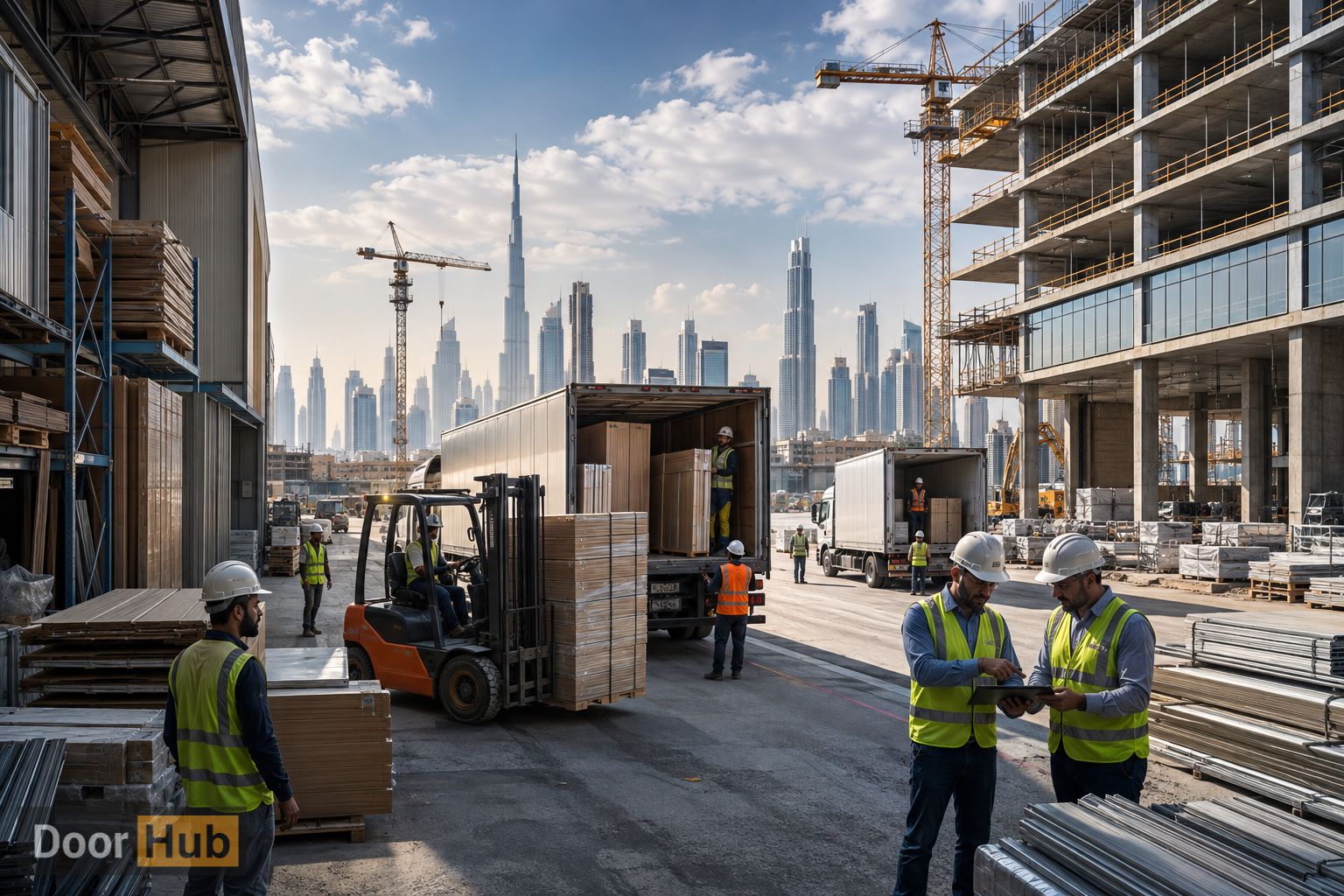
How Our Local Stock and Manufacturing Protect Your Project Timeline
Being local only matters if it translates into faster response when something on a project goes wrong. This is how our stock, manufacturing, and support structure actually function when a timeline is under pressure.
What Does "Local" Actually Mean in Our Supply Chain?
Direct answer: For us, local means UAE-based warehousing for standard products and in-house manufacturing capacity for custom and non-standard requirements, rather than a regional sales office forwarding orders to an overseas factory.
That distinction matters because a local sales presence without local stock or production capacity still carries the same international lead-time risk it's meant to solve. A project relying on that setup discovers the gap the same way it would with any overseas supplier, usually at the worst possible moment.
Our warehousing and manufacturing sit in the same market our projects are built in, which is what lets us respond in days rather than restarting an international order cycle.
How Much Standard Stock Do We Hold, and Why Does That Matter?
Direct answer: We maintain ready stock across our most commonly specified door types, cores, and hardware combinations, so a standard replacement or additional order doesn't require waiting on a new production run.
Why This Matters More at the End of a Project
Doors are typically among the last items installed before handover, which means any delay at this stage has almost no schedule buffer left to absorb. A project that discovers it needs ten additional units, or a replacement for a damaged batch, at week forty of a forty-two-week program can't afford to wait on fresh manufacturing.
Holding standard stock locally is what turns that scenario into a same-week resolution instead of a schedule-threatening event.
What "Standard" Actually Covers
Our stocked range covers the door types, cores, and finish combinations most frequently specified across UAE residential and commercial projects, based on what our own project history shows gets ordered most often, not a generic assumption about typical demand.
What Happens When a Site Reports a Damaged or Defective Unit?
Direct answer: Instead of initiating a new production order, a damaged or defective item reported from the site is evaluated and, if it meets stocked standards, replaced from existing inventory within days.
Why This Response Time Is the Real Test of "Local"
Damage during transit or site handling is a normal, expected part of construction, not a rare event. How a supplier responds to it is where the practical difference between local and international sourcing shows up most clearly.
An overseas supplier facing the same damaged unit is typically looking at weeks to months for a replacement to be manufactured, shipped, and cleared through customs. We're able to close that same gap from existing stock or a short local production run.
How quickly can a custom or non-standard order be completed locally?
Direct answer: Custom or non-standard orders, sizing outside stocked dimensions, specific finishes, or climate-adjusted specifications, are manufactured through our in-house production, which typically turns around significantly faster than an international reorder cycle because there's no additional shipping or customs step involved.
Why In-House Production Changes the Math
An international custom order usually means specification, manufacturing, shipping, and customs clearance stacked sequentially, each adding weeks. Producing the same custom specification locally removes the shipping and customs stages entirely, which is often where the majority of an international timeline is actually consumed.
This is particularly relevant for late design changes discovered during construction, where the alternative, an international reorder, can threaten a handover date outright.
How Do We Handle Warranty and Post-Handover Support?
Direct answer: Warranty claims and post-handover issues are handled directly by our local team, with site assessment and resolution managed in-market rather than routed through an overseas parent company or regional distributor with limited local authority.
A defect or performance issue raised after handover gets assessed on site by our own team, who can approve a repair, replacement, or adjustment directly, without waiting on approval from an international office in a different time zone.
This matters most in the months immediately after handover, when climate-related settling issues, if they occur, tend to surface and need a fast, locally accountable response.
What Happens During Peak Demand Periods When Everyone Needs Doors at Once?
Direct answer: During peak construction periods, when multiple developments are requesting doors simultaneously, local stock and production capacity provide a buffer that international sourcing doesn't have, since we're not competing with every other regional buyer for space on the same overseas production lines.
Overseas manufacturers serving multiple markets prioritize orders by size, timing, and relationship, which can leave smaller or later orders waiting behind larger regional demand. Local manufacturing capacity dedicated to the UAE market isn't subject to that same competition for production slots.
Frequently Asked Questions
How quickly can Doorhub replace a damaged unit from stock? Standard specification replacements are typically available within days when the unit matches our stocked range, without requiring a new manufacturing order.
Do you manufacture doors in the UAE, or import from overseas? Custom and non-standard specifications are manufactured in-house locally, while standard products are held as ready stock in our UAE warehousing.
Who handles warranty claims after handover? Our local team manages warranty assessment and resolution directly on site, without routing decisions through an overseas office.
Can local production handle the volume a large development requires? Yes, our manufacturing and stock capacity are structured around UAE project demand, including multi-unit developments requiring consistent specification across an entire building.
Key Takeaways
Local presence only protects a project timeline if it's backed by real stock, real manufacturing capacity, and locally accountable support, not just a nearby sales contact. Our warehousing, in-house production, and direct warranty handling are structured specifically to close the response gaps that threaten schedules on time-sensitive UAE projects.
If schedule risk is a concern on your current project, our team can review your door and hardware requirements against our current stock and production capacity before you finalize sourcing.
 Consultation
 Taking
 Forming
 Delivery
 Delivery