

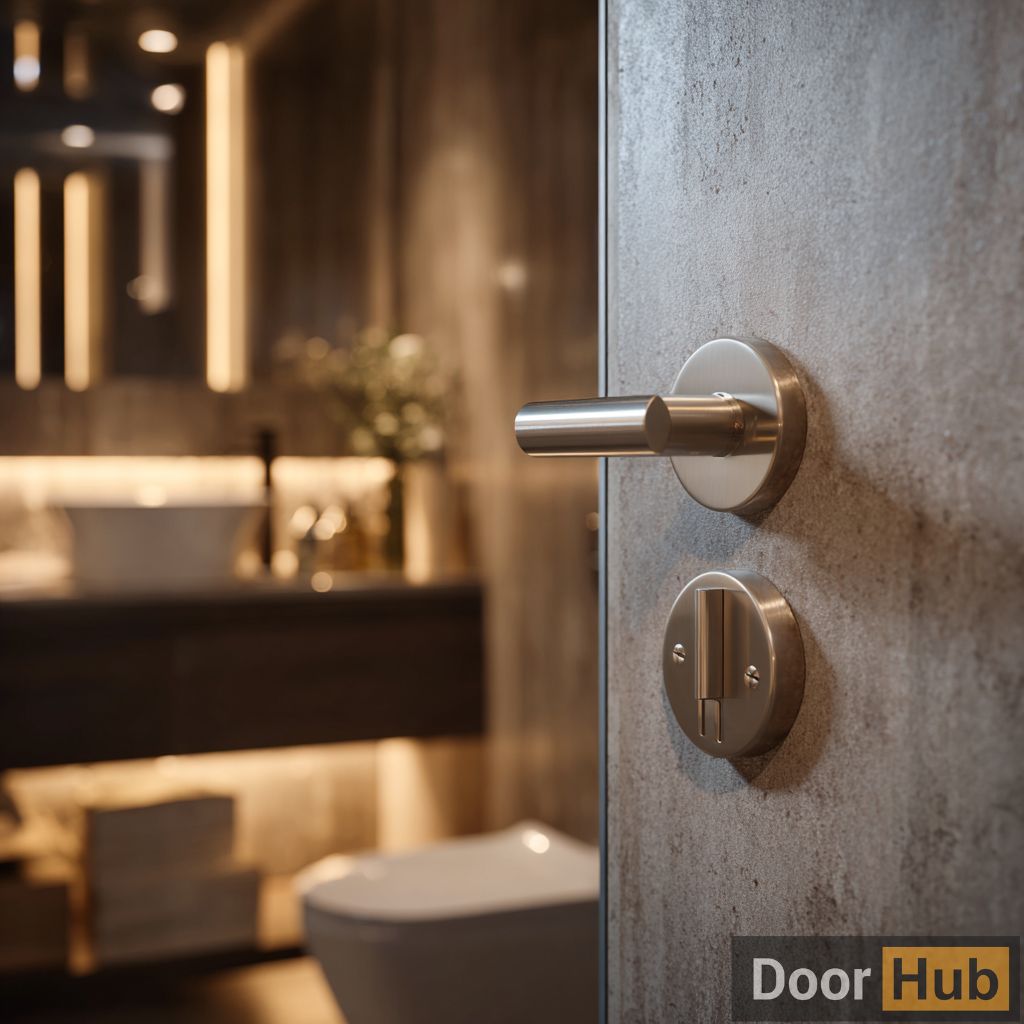
Why Manual Latches Are Mandatory for Commercial WC Doors
Commercial architecture prioritizes safety, compliance, and functionality over aesthetics, but aesthetics are not excluded (including form versus function subject one). When you consider WC (washroom) doors in both public and commercial spaces, one minor hardware selection can have a huge impact on the compliance and functionality: the manual latch.
Magnetic locks are becoming more widely used in residential and luxury environments due to both their aesthetics and soft-close motion, but they are neither an option (in many cases, not allowed) for WC doors in commercial projects. Here is why:
The Problem with Magnetic Mechanisms in Commercial WC Doors
Magnetic door latches typically use a magnetic force to hold the door closed, sometimes with a soft-close hardware option. This allows for operation very much like a soft-close drawer, but a soft-close latch will never provide the same feel of having it latched or the immediate tactile feedback or mechanical reliability as a traditional manual latch.
For commercial WC doors, this poses several issues:
- Safety in emergencies – In public buildings, all washroom doors must allow for quick, easy opening in case of emergency, without relying on electrical or magnetic force.
- Regulatory Compliance - Building codes in several scenarios will specify mechanical locking hardware on WC doors in public washrooms.
- High Traffic Wear and Tear - Magnetic mechanisms will almost always have a higher potential for mis-alignment, or wear and tear compared to thoughtful and robust mechanical latches.
- Confirmation of Privacy - In a busy washroom, people generally rely on having the actual door latched to get confirmation that they have privacy.
Why Manual Latches Are the Standard in Commercial Projects
Manual latches are simple, mechanical, and dependable. For developers and facility managers, they offer:
- Code compliance – Meeting safety standards and avoiding costly retrofit work.
- Long-term durability – Designed to withstand thousands of open/close cycles without failure.
- Universal usability: Easy to use for all users, even young ones and others who are not familiar with the area.
- Maintenance efficiency – Easy to repair or replace without specialized tools.
In WC cubicles and accessible toilets, this reliability is not just a preference—it’s a requirement.
Door Hub’s Commitment to Compliance and Quality
At Door Hub, we work closely with developers, architects, and contractors to ensure every project meets both design ambitions and regulatory requirements. For commercial WC doors, we always recommend and supply high-quality manual latch hardware that:
- Meets international safety standards
- Performs reliably under heavy daily use
- Integrates aesthetically with modern door designs
- Is available for bulk procurement with short lead times
We understand that hardware choices affect the long-term performance, safety, and perception of your commercial space, and we help ensure you get it right from the start.
Final Word: Safety First
Although magnetic locks have their merits in luxury interiors and home spaces, WC doors in commercial spaces require certain mechanical solutions that prioritize safety, accessibility, and compliance. A manual latch is not just a recommendation, it's a requirement, and for good reason.
Need Expert Advice for Your Project?
To make sure your commercial WC doors satisfy all safety, design, and compliance requirements, speak with our experts at Door Hub.
 Consultation
 Taking
 Forming
 Delivery
 Delivery